
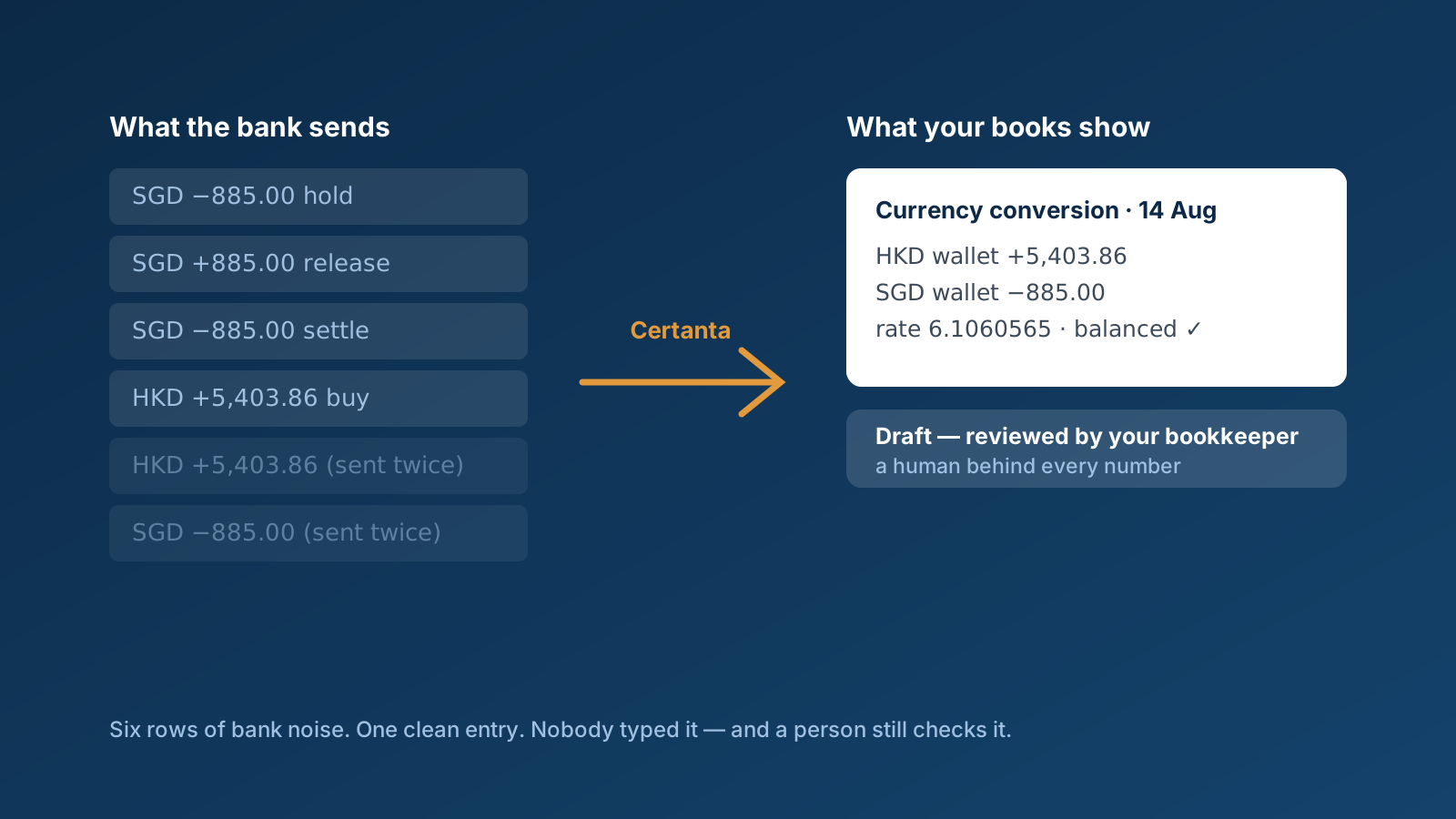
Late on a Friday evening, one of the companies we keep books for converts some Singapore dollars into Hong Kong dollars in its Airwallex account. By the next morning, the transaction is sitting in its accounts — correctly recorded, in both currencies, at the exact rate the bank used. Nobody at the company typed anything, uploaded anything, or will ever have to.
That's the promise of connecting Certanta, the bookkeeping platform behind our accounting service, straight to a client's bank. But the promise isn't the interesting part. The interesting part is what has to happen behind the scenes before "automatic" deserves your trust — and why we built it so that a real person still stands behind every number.
This isn't software for you to operate. It's work you hand over.
Xero and QuickBooks are fine tools — for people who want to do bookkeeping. Their bank feeds still leave the work on your desk: reviewing the feed, picking categories, setting up rules, reconciling at month end, chasing whatever doesn't match. The software is the instrument; you're still the musician.
Certanta is built on the opposite idea: you shouldn't be doing this at all. You connect your accounts once, forward statements and receipts as they come — bulk-upload a shoebox of them if that's your style — and call it a day. The daily grind of turning bank movements into proper books is our job. What you keep is the part owners actually want: visibility. Open your dashboard any morning and see where the money is, who owes you, and what this month looks like — without having spent a minute producing those answers.
And when a question comes up — a bank asking for a document, a payment that looks odd, "can I afford to hire?" — you ask a person who knows your file. Through the portal, by email, instant messaging, a phone call, or by walking into our office, a minute from Tin Hau MTR. Try that with a global software platform: what you'll find is a help centre, a community forum, and a chatbot. Nobody who knows your company is picking up.
You grow the business. We keep the score. That's the whole deal.
It learns your business — fast
Here's what makes the automation genuinely good rather than genuinely annoying: the system builds a memory of your company, from the decisions our bookkeepers make on your file.
On the second day of running one client's bank feed, a HK$14,000 payment went out. The system recorded it as rent, on its own — it had already learned who the landlord was. It knows this client's payment processor adds a 5% card fee by design, so when a customer's payment arrives slightly short of the invoice, it isn't confused. It knows which supplier means audit fees and which means IT. Every correction a human makes teaches it, so every month there's less to correct.
And here is the sentence I want you to remember, because "AI accounting" gets sold very carelessly these days: the learning makes our people faster — it never replaces them. Everything the system produces lands as a draft. A bookkeeper who knows your company reviews it, decides anything ambiguous, and owns the result. That's the standard Certanta runs on: there is always a human behind every number.
Two small stories about why the safeguards matter
Trust in automation isn't built by the happy path. It's built by what happens when reality gets messy — and bank data gets messy fast.
The conversion that arrived in six pieces. That Friday-night currency exchange? The bank didn't report it as one event. It sent a hold, a release of the hold, the actual charge, the credit on the other side — and then sent half of it twice. Recorded naively, that one exchange would have hit the books two times over. Certanta recognised the pieces as one event and recorded exactly one clean entry, at the bank's real rate. When it can only find half of a conversion, it doesn't guess — it asks a person. (Why platform conversions arrive in pieces, and how they should be booked, is covered in Certanta's guide to bookkeeping for Airwallex, Wise, Mercury and Revolut.)
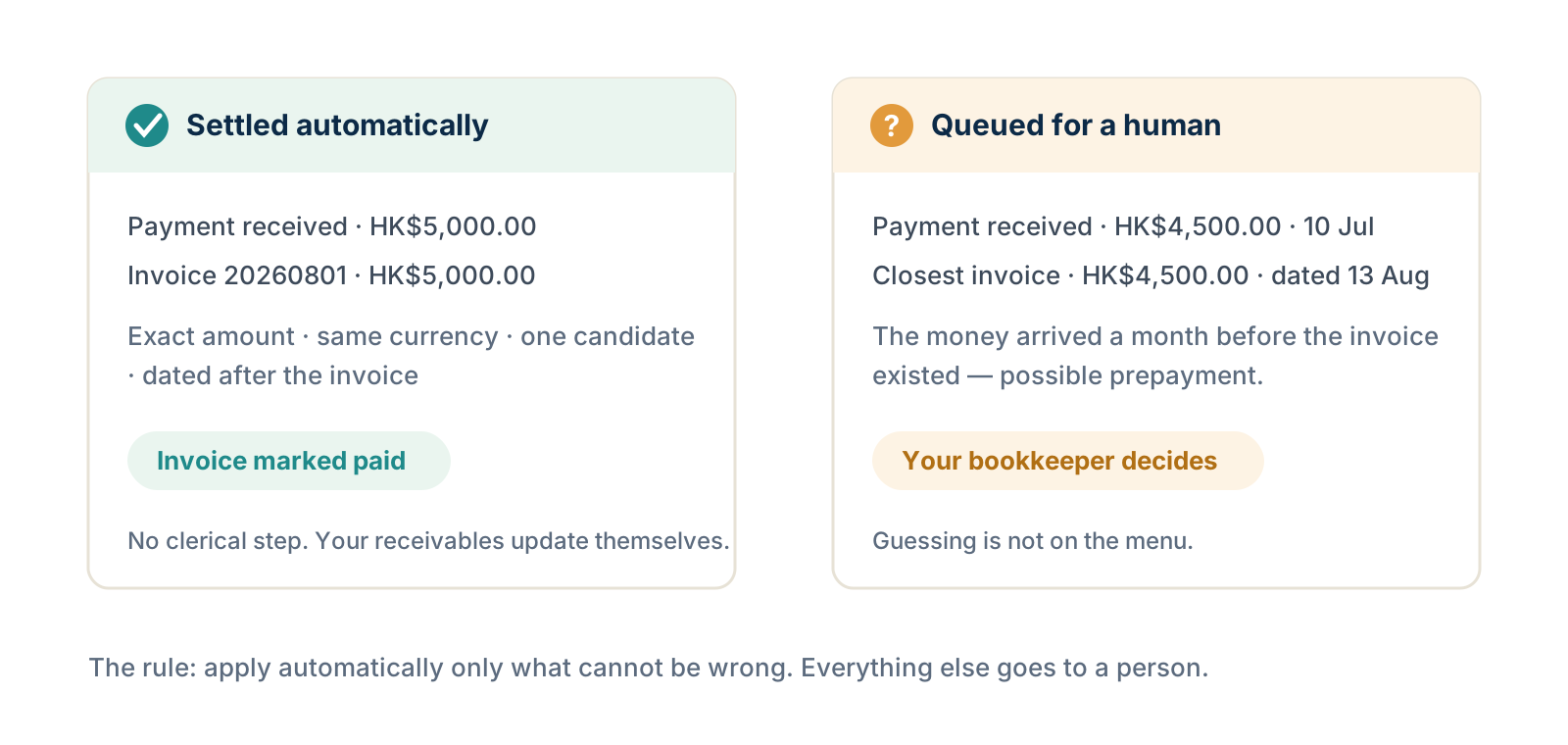
The payment that almost paid the wrong bill. Certanta also matches incoming payments to your outstanding invoices, so "who still owes me?" stays current by itself. In early testing, it spotted a payment that matched a brand-new invoice perfectly — same customer, same amount, to the cent. One problem: the payment had arrived a month before that invoice existed. It was actually the settlement of an earlier, identical bill. So the matcher lives by a rule that sounds obvious once you say it out loud: money can't pay an invoice that didn't exist yet. Perfect-looking matches that break that rule — or any match with the slightest ambiguity — go to a human to decide.
One more habit worth mentioning: when something doesn't add up, our reports say so — visibly, on the report — instead of quietly presenting a clean-looking page. A report that can admit "this doesn't tie yet, here's the difference" is worth more than one that always smiles. Your auditor will agree.
What your side of it looks like
- Connect once. Fintech accounts like Airwallex sync themselves daily. Yesterday's money is in this morning's books.
- Forward the rest. HSBC and Hang Seng do feed the big platforms like Xero and QuickBooks — but not ours yet. So for traditional bank accounts you simply send the monthly statement, and receipts as they happen. Everything is read automatically; nothing is typed — and it passes through the same checks as the live feeds.
- Look whenever you like. Live balances, who owes you, monthly results — a window into your accounts, not a to-do list.
- Audit season stops being archaeology. Hong Kong companies face a statutory audit every year. With every entry born linked to its bank line and its document, the auditor's "show me" is answered with a link, not a shoebox. That's weeks of your life back, annually. (Certanta's guide to what your auditor actually asks for shows the full year-end list.)
Outsource the bookkeeping. Keep the visibility.
818HI delivers bookkeeping and audit management for Hong Kong companies through Certanta: daily bank feeds, books that build themselves, and a real bookkeeper behind every number — while you get on with growing the business.
Explore accounting with 818HIFrequently asked questions
Do I have to manage my accounts day-to-day?
No — that's the point. Connect your fintech accounts once, forward statements and receipts as they come, and Certanta plus our bookkeepers do the rest. You get a live view of your numbers whenever you want one, without doing the bookkeeping yourself.
How is this different from Xero or QuickBooks?
Two ways. Those are software you operate: you review the feed, apply rules, chase categories, reconcile at month end. Certanta is an outsourced service with software inside — the daily work is ours, the visibility is yours. And when you have a question, you reach a person who knows your file — portal, email, instant messaging, phone, or an office visit — not a help centre and a chatbot.
Does automatic mean nobody checks the numbers?
No. Everything the system produces arrives as a draft, and a real bookkeeper reviews it before it becomes final. Only matches that cannot be wrong are applied automatically; anything ambiguous goes to a person. There is always a human behind every number.
Does this work with Hong Kong banks?
Fintech accounts like Airwallex sync daily through their APIs. HSBC and Hang Seng offer feeds to platforms like Xero and QuickBooks, but not yet to ours — so those accounts flow in via monthly statements, read automatically, through exactly the same checks and human review. In practice: daily books for fintech accounts, monthly for traditional ones.
The transactions described are real examples from books we keep, shared with permission. Airwallex links in this article are affiliate or referral links — 818HI may earn a commission if you sign up through them, at no additional cost to you. General information, not professional advice for your specific situation.